This spring, Bucharest becomes the setting for a symbolic reunion with the life and work of one of Olt County’s most important folk creators. On Sunday, February 22, 2026, at 12:00 PM, the temporary exhibition of photography, sculpture, and books “The Carver of Thoughts” will open at the “Dimitrie Gusti” National Village Museum, in the H.H. Stahl Foyer Hall, dedicated to the memory of sculptor and collector Nicolae M. Nica.
The event marks 109 years since the artist’s birth (February 7, 1917) and takes place within a double anniversary context: 90 years since the founding of the Village Museum and the celebration of 150 years since the birth of Constantin Brâncuși, with 2026 officially declared the “Brâncuși Year.”
A Destiny Linked to Ethnographic Museums
The presence of the exhibition at the Village Museum is no coincidence. In 1936, the young Nicolae M. Nica worked here as a carpenter, a craft he had learned from his father. In his autobiographical book “The Enchanted Ciochia”, the artist recalls the moment when, on the museum construction site coordinated by Dimitrie Gusti, he discovered the profound meaning of tradition and beauty. This experience would permanently shape his artistic path, which continued to develop after the Second World War.
For a period settled in Pitești, he attended the Popular School of Arts, Sculpture Department. He became a valued collaborator of the Golești Museum, whose director at the time, Mr. Vasile Novac, encouraged him to remain and work there. Nicolae M. Nica respectfully declined, stating: “If I remain here, I will never be able to equal the Brătianu family, Golești, Izvorani, or Rebreanu. So, Mr. Director, please allow me to return to my native village, Chilia, and try to place it somewhere on the cultural map.”
An Impressive Cultural Legacy
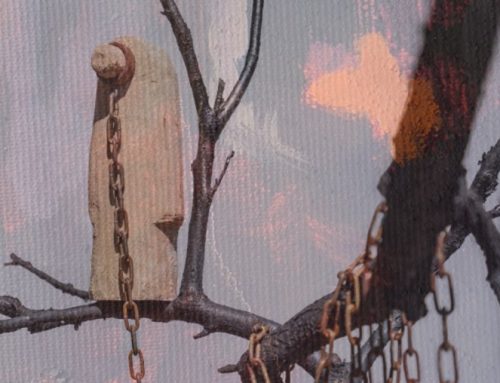
Born in the village of Chilia, Făgețelu commune, Olt County, Nicolae M. Nica was a sculptor in wood and bone, creating works carved from a single piece of material, without joints, remarkable for their symbolic strength and philosophical depth. His themes – “Eternity,” “The Union,” “The Lesson of Life,” “The Hora,” “Miorița,” “Sacrifice” – capture the essence of the Romanian village and its core values.
In 1979, the artist founded the Chilia Village Museum, which he donated to the state in 1994; today it stands as an important regional cultural landmark. A member of the Academy of Traditional Arts of Romania and an Honorary Citizen of Olt County, Nicolae M. Nica remains a model of dedication to Romanian heritage.
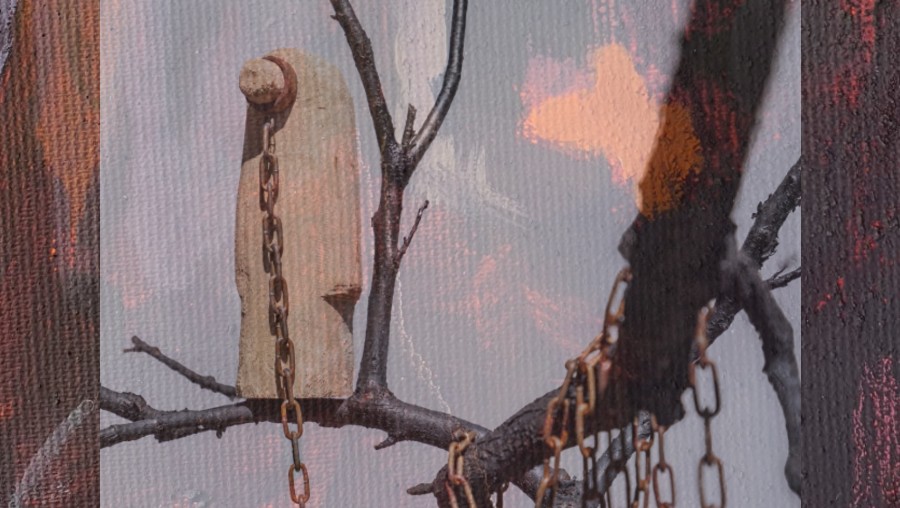
His sculpture is distinguished by verticality, balanced compositions, and an expressive stylization of the human figure, carved from a single piece of wood, with incisions and carved details that animate the surface. Themes inspired by village life and history transform his characters into symbols of identity and traditional dignity. Although close to the register of naïve art, his creation transcends decorative dimensions, proposing sculpture of symbolic and reflective depth.
The Contribution of the Golești Museum – An Essential Partner
A major role in the realization of the Bucharest exhibition is played by the Golești Museum of Viticulture and Fruit Growing, which holds in its collections more than 30 works signed by Nicolae M. Nica.
The Golești Museum contributes to the exhibition with a representative selection of sculpted panels previously presented to its own visitors. The works preserved in our museum’s collection illustrate the thematic diversity and expressive strength of Nica’s creation, ranging from historical and allegorical compositions to scenes inspired by rural community life.
Through its involvement, the Golești Museum not only valorizes its own heritage but also actively fosters dialogue among museum institutions in Argeș, Olt, and Bucharest, consolidating a cultural network dedicated to promoting representative folk creators. This initiative continues the museum’s mission to preserve and bring to public attention personalities who have shaped Romanian cultural identity.
Photography, Document, and Memory
The exhibition brings together sculptures from the collections of the Olt County Museum – Chilia Village Museum Section – and the Golești Museum, photographs taken by Valeru Ciurea, books published by the artist, and personal documents from the family collection.
Together, they offer a complex insight into the universe of Nicolae M. Nica – not only as a master woodcarver, but also as a thinker, collector, and guardian of the Romanian village’s memory.
“The Carver of Thoughts” exhibition can be visited at the “Dimitrie Gusti” National Village Museum between February 22 and March 22, 2026, offering the public the opportunity to discover or rediscover the work of an artist who transformed tradition into destiny and wood into a reflection on Romanian identity.
Curators: Valeru Ciurea & Ion Tița Nicolescu
Text author: Camelia Călin